dr. Octavian Ulici
In the race to deploy scalable Software-as-a-Service (SaaS) platforms, speed is often prioritized above all else. Engineering teams routinely rely on Open Source Software (OSS) components to avoid reinventing the wheel for standard functionalities like authentication, data serialization, or UI rendering. While this ecosystem accelerates time-to-market, it introduces a severe, often invisible risk to a company’s intellectual property: copyleft contamination.
For commercial software vendors, an unvetted dependency is a structural vulnerability. If an engineer inadvertently merges a component governed by a restrictive open-source license into your proprietary codebase, the legal consequences can be catastrophic to your corporate valuation.
Understanding the Mechanics of Copyleft “Contamination”
Open-source licenses broadly fall into two categories: permissive (such as MIT, Apache 2.0, or BSD) and copyleft (such as the GNU General Public License, or GPL).
Permissive licenses allow developers to use, modify, and redistribute the code within proprietary software with minimal restrictions, usually requiring only a simple copyright notice. Copyleft licenses, however, operate on a principle of reciprocity.
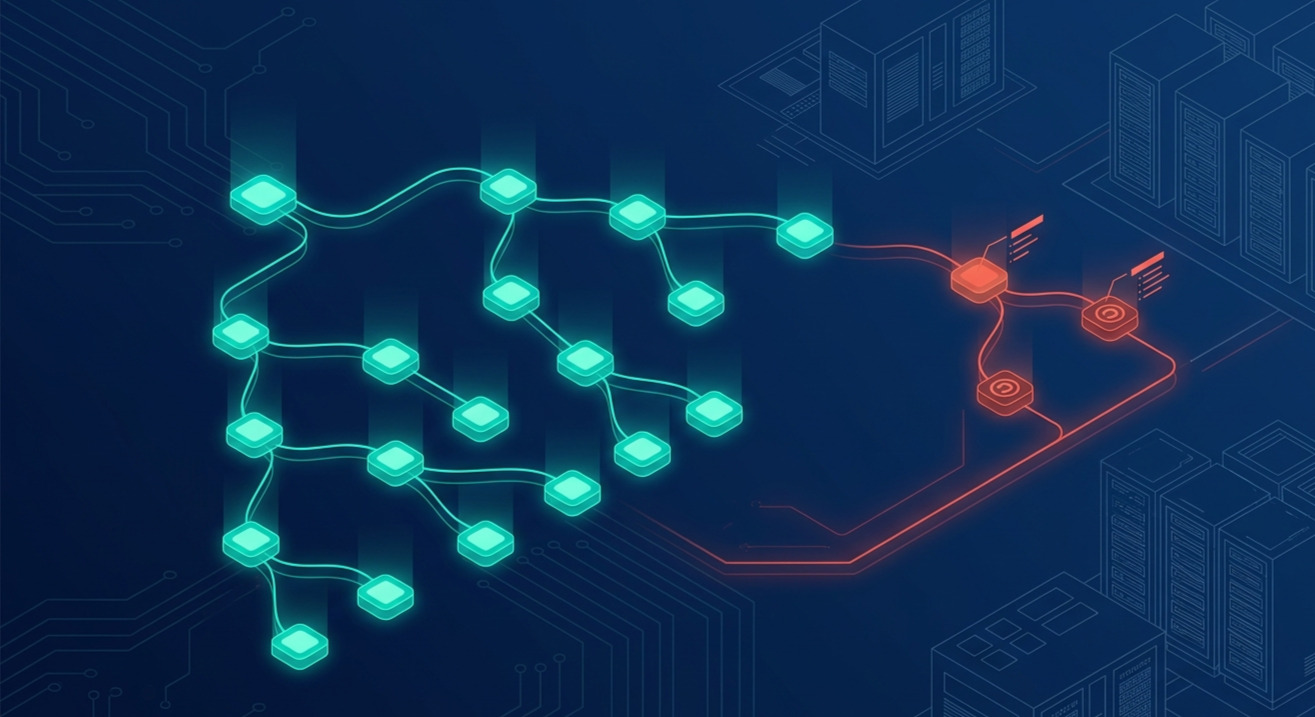
Under strong copyleft licenses like the GPL v3, software that incorporates, links to, or is derived from the copyleft component must be distributed under those same open-source terms. If a proprietary SaaS codebase is found to have dynamically or statically linked against a GPL v3 component in a way that creates a derivative work, the company could be legally compelled to make its entire proprietary source code available to the general public.
[Permissive: MIT/Apache] ──> Blends seamlessly into Proprietary Code (Safe Commercial Use)
[Copyleft: GPL v3] ──> Triggers Reciprocity Mandates (Forced Code Disclosure Risk)
While the SaaS model historically offered a shield—since the software runs on a cloud server rather than being distributed to the client’s machine—the boundaries are blurring. Modern architectural frameworks that push significant logic to the client side (such as complex JavaScript web applications, web assembly modules, or distributed microservices) can technically trigger distribution clauses under specific copyleft licenses like the AGPL (Affero GPL), which explicitly covers network interaction.
The Operational Shield: Automated OSS Compliance Pipelines
Relying on manual audits or expecting developers to read the legal documentation of every sub-dependency is an ineffective strategy. Modern software dependencies form deep, nested trees; a single npm, pip, or Maven package might pull in dozens of transitive dependencies, any one of which could carry a restrictive license.
To insulate your IP, compliance must be integrated directly into your continuous integration and continuous deployment (CI/CD) pipelines.
1. Automated License Scanning
Implement automated SCA (Software Composition Analysis) tools—such as FOSSA, Snyk, or Black Duck—directly into your version control system (GitHub, GitLab). These tools automatically scan dependency trees at every pull request, flagging unauthorized licenses before the code can be merged into the main branch.
2. Binary Policy Enforcement
Establish explicit, automated policies within your repository settings. For example, configure your pipeline to automatically pass permissive licenses (MIT, Apache) but instantly block and fail builds that attempt to introduce GPL, LGPL, or AGPL dependencies without manual legal sign-off.
Dual-Licensing Architectures: Turning Compliance into Strategy
For tech companies that both consume and produce software, understanding these license boundaries allows for the creation of sophisticated, legally sound commercial models. One of the most effective strategies is the dual-licensing architecture.
Under this model, a software company releases its core engine under a copyleft license (allowing the developer community to use and improve it for free, provided their own derivative works remain open), while simultaneously selling a separate, proprietary commercial license to enterprise clients who wish to integrate the engine into their own closed-source commercial platforms.
This creates a self-enforcing business model: the copyleft license protects your technology from being appropriated by competitors for free, while driving enterprise clients to purchase your commercial licenses to avoid contamination risks.
Satisfying Tech Due Diligence in Venture Funding Rounds
The true cost of poor open-source governance is rarely paid in a courtroom; it is paid at the negotiation table during a funding round or an acquisition.
When venture capital firms or institutional buyers conduct due diligence on a software company prior to a multi-million euro investment, the IP and Technical Audit is a critical hurdle. Investors will deploy specialized tools to crawl your entire codebase. If they discover unmapped copyleft dependencies or a lack of internal compliance protocols, it signals severe structural risk.
An unvetted codebase can delay transactions, severely depress your company’s valuation, or cause investors to walk away from the deal entirely. Remediating a contamination issue retroactively—re-engineering core features to strip out a deeply embedded GPL component under a tight deadline—is an expensive and high-stress logistical nightmare.
Proactive IP architecture is not an administrative burden; it is a foundational component of corporate asset preservation. By implementing strict automated governance and maintaining a pristine, audited ledger of your software dependencies, you ensure that your proprietary code remains exclusive, compliant, and fully valued in the European market.
No responses yet